

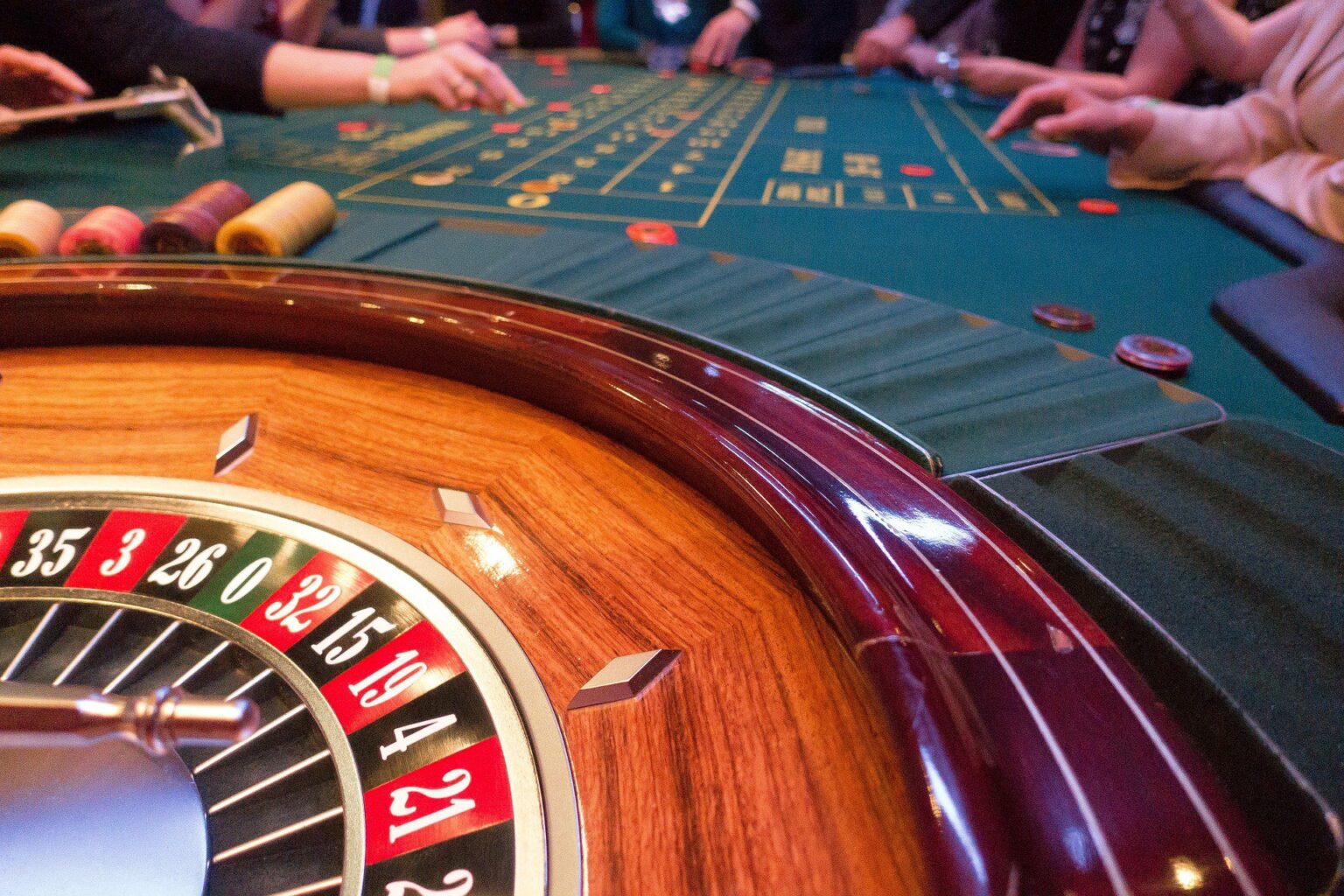
Approaching a casino table game for the first time can feel electrifying, but that wave of enthusiasm often leads even seasoned players into preventable pitfalls. We have spent countless hours studying how different personalities tackle blackjack, roulette, baccarat, and poker variants, and the mistake patterns are strikingly uniform across skill levels. The house edge is already built into the math in every game, so handing the casino further benefits through careless choices simply hastens losses. What captivates us most is that many of these errors stem not from a shortage of understanding but from psychological pressures, social anxiety at a crowded table, or the erroneous notion that a hot streak bends the odds. At Slotoro Casino, we believe that informed players derive far more satisfaction from their sessions because they comprehend the mechanics behind the payoffs. Our goal here is not to promise surefire victories, because no strategy can eliminate the built-in house advantage entirely. Instead, we want to equip you with a clear-eyed perspective on the most common mistakes we see, so you can take a seat at any table with assurance, self-control, and a true respect for the art of the game itself.
Putting Volatile Side Bets In the Absence of Comprehending Payout Structures
Modern table games more and more offer optional side bets with flashy names and advertised payouts that can reach into the thousands for a single unit wagered, and we have watched these seductive propositions destroy bankrolls with remarkable efficiency. The fundamental issue is not that side bets exist; it is that players seldom investigate the actual house edge attached to them before throwing chips onto those additional circles. Perfect pairs in blackjack, the dragon bonus in baccarat, or various poker-based progressive jackpots often have house edges exceeding ten percent, which is several times higher than the main game itself. The psychological mechanism that makes these bets so dangerous is the combination of a low entry price, typically a single unit or less, and the visible spectacle of occasional massive payouts that create a distorted perception of frequency. We see players who meticulously apply basic strategy to their main blackjack hand while simultaneously bleeding chips through a side bet that mathematically guarantees faster losses than almost any other wager in the casino. The casinos prominently display the top-tier payouts because they know our brains overvalue vivid, rare events while underweighting the steady drip of losing bets that fund those jackpots. Our recommendation is not to universally avoid side bets, because some players genuinely enjoy the lottery-like thrill they provide and are willing to pay for that excitement. The mistake lies in betting on them without conscious awareness of the cost. We suggest looking up the house edge for any side bet before committing to it, and then treating it as a separate entertainment purchase with its own dedicated budget rather than an integrated part of your table game strategy. When you see that a particular side bet carries a house edge of fifteen percent, you can make an informed choice about whether the occasional adrenaline spike justifies the accelerated expected loss.
Falling for the Gambler’s Fallacy and Pattern Fixation
The human brain is an remarkable pattern-recognition engine, but at casino tables this innate gift often leads us astray into the domain of the gambler’s fallacy. We come across it expressed constantly in phrases like “the roulette wheel has landed on red six times in a row, so black is due” or “the dealer has been busting all night, so I should stand on this fifteen.” The probabilistic reality is that each spin of a fair roulette wheel is an independent event with no memory of previous outcomes, and the probability of red on the next spin remains exactly eighteen in thirty-seven or eighteen in thirty-eight without regard to the preceding sequence. The same independence applies to dice throws in craps, card distributions in properly shuffled decks, and the outcome of baccarat hands. What makes this fallacy so enduring is that it feels intuitively correct; our brains have evolved to detect causal relationships in the natural world, where events are rarely truly independent, and we reflexively apply that same cognitive machinery to casino games where it has no validity. Closely related is the tendency to obsessively track patterns on electronic displays that many modern tables provide, showing the recent history of outcomes. These displays are purely informational entertainment features that have zero predictive value, yet we see players staring at them intently and altering their bets based on perceived trends. The casino is happy to provide these history boards precisely because they encourage pattern-based betting that does not change the underlying odds one iota. We also encounter the reverse fallacy, where players believe that a winning streak indicates they are “hot” and therefore should increase their bets because some personal momentum has taken hold. Both versions of this thinking assign causal meaning to random clustering, which is a natural feature of any stochastic process. Streaks happen in truly random sequences far more frequently than our intuition expects, and they signify nothing about future outcomes. We recommend players to view each bet as a fresh independent event and to make decisions based on the static probabilities rather than the sequence that happened to precede it.
Badly managing the Bankroll and Session Scheduling
We have noticed that the difference between a player who exits the table happy and one who leaves frustrated often has less to do with the cards or dice than with how they structured their bankroll before taking a seat. The most common bankroll error entails bringing an amount that is too small in relation to the table minimum, which produces immediate pressure to win and eliminates the breathing room necessary to absorb normal variance. If you sit at a twenty-unit minimum blackjack table with only two hundred units total, you are effectively having ten bets, and a routine negative fluctuation of four or five hands in a row places you in a precarious position where rational decision-making declines. We suggest having at least thirty to fifty minimum bets available for any session where you plan to play for more than an hour, because this cushion allows the mathematical probabilities to express themselves without requiring desperate measures. Equally important is determining a time limit before you begin, because cognitive fatigue reduces decision quality in skill-based games like blackjack and poker variants. After ninety minutes of concentrated play, most people encounter measurable declines in attention and working memory, which manifests as slower calculations, forgotten strategy rules, and increased vulnerability to impulsive bets. The casino environment is deliberately structured to obscure the passage of time through the absence of clocks and windows, so relying on internal time perception is untrustworthy. We propose setting a phone alarm or wearing a watch and treating the time limit as strictly as the loss limit. Another dimension of bankroll management that deserves attention is the separation of gambling funds from daily life finances. Players who mentally mix their table game budget with money designated for rent, bills, or essential expenses make poorer decisions under pressure because the stakes feel life-altering rather than recreational. We think that clearly defined session bankrolls, treated as the price of admission for an evening’s entertainment, establish the psychological conditions for composed, strategic play.
Misreading the Casino Advantage and Game Selection

One of the most basic missteps we observe involves players drawn to flashy games without ever scrutinizing the mathematical foundations that control their odds. The house edge signifies the casino’s built-in edge on each wager, shown as a percentage of every unit bet over an endless number of trials. What strikes us consistently is how many clever people will sit at a roulette wheel with a double zero without understanding that this single extra pocket inflates the house edge from roughly two point seven percent to over five percent on most bets. analīze That difference might sound minor when stated abstractly, but over a three-hour session it accumulates steadily, effectively multiplying the speed at which your bankroll diminishes. We always suggest taking five minutes before placing a single chip to research which variant of your chosen game carries the lowest house edge. In blackjack, tables that pay three to two for a natural blackjack rather than six to five preserve a significant portion of your expected return. In craps, focusing on pass line and come bets with full odds places you in the most advantageous territory the game offers. Baccarat players should be aware that the banker bet, even after commission, stays mathematically superior to the player and tie wagers by a notable margin. Game selection is not about discovering a magic loophole; it is about declining to play versions that needlessly punish you before the cards are even dealt or the dice are tossed. We consider this mistake as the unseen bankroll killer that functions unnoticed while players concentrate solely on short-term results.
Disregarding Basic Strategy for Blackjack
Blackjack enjoys a special position among table games because player decisions directly influence the house edge, yet we often see individuals making choices based on gut feeling rather than the mathematically proven basic strategy. Standing on a soft seventeen against a dealer’s seven, splitting tens against a six, or refusing to hit a twelve against a dealer’s two are all deviations that silently transfer additional percentage points to the casino. Basic strategy charts are not arcane theoretical constructs reserved for card counters; they are openly available, straightforward reference tools distilled from millions of computer simulations that map the optimal play for every possible hand combination against every dealer upcard. We understand that memorizing dozens of decision rules can feel intimidating at first, but the core patterns are intuitive once you grasp the underlying logic. The dealer’s bust probability drives many of the most important choices, and recognizing that the dealer will bust roughly forty-two percent of the time when showing a five or six explains why we stand on stiff totals in those situations. Modern casinos are generally tolerant of players consulting strategy cards at the table, especially in casual settings, so there is genuinely no barrier to playing near-perfect blackjack from your very first session. The mistake we find most perplexing is the player who insists on trusting hunches while simultaneously complaining about persistent losses. Blackjack benefits disciplined decision-making more than any other mainstream table game, and abandoning basic strategy essentially transforms it into a game of chance with a significantly worse expected return than necessary. At Slotoro Casino, we see knowledgeable blackjack players reliably extracting longer sessions and more entertainment value from identical bankrolls compared to those who wing it.
Recovering Losses with Escalating Bet Sizes
The emotional cascade that follows a losing streak constitutes perhaps the most destructive behavioral pattern we come across at casino tables https://slotoro-casino.com.lv/. When three or four consecutive hands turn unfavorable, a primal urge surfaces to instantly recover those lost chips by doubling or multiplying by three the next wager. This impulse feels reasonable in the heat of the moment because our brains desperately seek closure and hate ending a session in the red. However, we have observed that loss chasing rarely restores a player to their original position; instead, it typically worsens the hole at an speeding up pace. The mathematics here are harsh because the odds on each individual hand or spin remain entirely independent of what happened previously. A blackjack hand after five losses carries exactly the same probability distribution as a hand after five wins, yet the raised bet size means a sixth loss now delivers unbalanced damage. We advise a pre-set session loss limit that serves as an automatic circuit breaker. When that limit is reached, walking away seems difficult but proves far less agonizing than the regret of having wiped out an entire bankroll in a frantic ten-minute attempt to break even. Progressive betting systems that raise stakes after wins rather than losses can structure the experience more agreeably, but even these should be handled with full awareness that no staking plan modifies the underlying house edge. The casino floor is built to keep you at ease and involved, so the discipline to step back must come wholly from within. We have found that players who regard each session as an entertainment expense with a fixed ceiling always report greater satisfaction than those who see the tables as a recovery mission after an early deficit.
Overlooking the Effect of Alcohol and Fatigue on Decision Quality
Comped drinks are a renowned feature of casino hospitality, and we recognize that a cocktail or two can improve the social enjoyment of an evening at the tables. The mistake we see repeatedly, however, is players crossing the invisible threshold where alcohol consumption begins to measurably impair the cognitive functions required for optimal play. Blackjack basic strategy demands working memory, probability estimation, and the inhibition control to resist impulsive deviations, all of which deteriorate steadily with each additional drink. Even in purely chance-based games like roulette or baccarat, alcohol reduces the safeguards on bet sizing discipline and makes loss chasing dramatically more likely. The insidious aspect of this impairment is that the drinker is typically the last person to recognize it, because alcohol’s initial effects include heightened self-assurance and reduced self-monitoring. We have watched competent blackjack players gradually abandon basic strategy over the course of a long session, making increasingly creative justifications for their deviations as the evening progresses. The casino environment amplifies this effect through its absence of natural time markers and its steady supply of beverages, creating conditions where moderate drinking can unintentionally escalate. Our practical suggestion is to establish a personal limit before arriving, perhaps two drinks over a three-hour session with water interspersed, and to periodically perform a quick mental self-check by attempting to calculate a simple strategy decision. If you find yourself struggling to recall whether you should double an eleven against a dealer’s ten, it is probably time to transition to a purely recreational mode with minimal bets or to step away entirely. Fatigue operates similarly even without alcohol, as sustained concentration depletes mental energy reserves that are finite. Late-night sessions after a full day of work or travel start with a cognitive handicap that widens as the hours pass. We believe that scheduling table game play during periods when you are genuinely alert and setting firm endpoints safeguards both your bankroll and your enjoyment of the experience.
Overlooking Table Etiquette and Dealer Communication
Even though this misstep does not alter the mathematical chances, we have witnessed poor table etiquette create enough social friction to ruin an otherwise enjoyable session and even lead to costly procedural errors. Casino table games operate on a framework of established hand signals and verbal cues that serve to prevent disputes and ensure security camera clarity, and neglecting these protocols can result in voided bets or misunderstood decisions. In blackjack, tapping the table to hit and waving a flat hand to stand are universal signals that dealers are taught to recognize instantly, and using ambiguous gestures or mumbled words introduces confusion during fast-paced hands. We have observed players who nod vaguely or point uncertainly, only to have the dealer misinterpret their intention and deal an unwanted card that busts a solid hand. The same clarity applies to roulette, where placing chips after the dealer announces “no more bets” causes the wager being returned or disqualified, often accompanied by an awkward exchange that disrupts the table’s rhythm. Beyond formal procedures, basic courtesy toward dealers and fellow players significantly enhances the experience. Dealers are service professionals working long shifts, and treating them with respect rather than blaming them for unfavorable cards creates a more pleasant atmosphere for everyone. We have observed that players who berate dealers after losses not only make themselves unwelcome but also tend to play worse because their emotional energy is directed outward rather than toward disciplined decision-making. Tipping dealers when you are winning is traditional in many jurisdictions and generates goodwill that can lead to helpful reminders about procedures or subtle pacing adjustments. Another etiquette dimension concerns managing your physical presence at the table, such as not occupying a seat if you are not actively playing during busy periods, keeping drinks safely away from the felt, and refraining from offering unsolicited strategy advice to other players unless explicitly asked. We consider table etiquette an underappreciated component of the overall casino experience, because a harmonious table dynamic enables you to concentrate entirely on your game without the distracting static of interpersonal tension.
Not being able to Distinguishing Between Strategy-Based and Luck-Based Games
A conceptual error that subtly shapes countless losing sessions is the tendency to approach every table game with the same mental framework, without acknowledging the essential divide between games where decisions matter and games where outcomes are completely random. Blackjack and poker variants fall into the skill-based category because the choices you make at each decision point directly alter your expected return. In these games, studying strategy, understanding position, and reading opponents where applicable are investments that pay measurable dividends over time. Roulette, baccarat, craps with the exception of odds bets, and most carnival games fall into the pure chance category, where no decision you make after placing your bet influences the outcome. The mistake appears when players spend enormous mental energy trying to develop “systems” for beating roulette or hunting for patterns in baccarat that will predict the next hand. That cognitive effort is completely wasted because it cannot affect a random process, and it often takes away from the one decision that does matter in these games: picking the bet with the lowest house edge and handling your stake appropriately. We also see the reverse error, where players treat blackjack as if it were a game of pure luck and make no effort to learn basic strategy, thereby voluntarily accepting a house edge that could be greatly reduced through simple study. Understanding which category your chosen game falls into allows you to allocate your preparation time efficiently. For skill games, that means memorizing strategy charts, training decision speed, and mastering to maintain discipline under pressure. For chance games, preparation means researching which bets carry the lowest house edge, defining clear bankroll parameters, and centering on the social and entertainment dimensions rather than chasing an illusory edge. This distinction also helps shape your expectations realistically. Walking away from a roulette session down twenty units is a normal statistical outcome, not a failure of your system or a sign that you played poorly. Walking away from a blackjack session down the same amount after repeatedly ignoring basic strategy is a remediable error. We find that players who internalize this categorization approach the tables with a better mindset and derive more reliable satisfaction from their play at Slotoro Casino.
